Surgical Table Repair & PM for Surgery Centers, Hospitals & Specialty ORs
PBES helps keep surgical tables safe, articulate, and inspection-ready — with service for height, tilt, Trendelenburg, hand controls, hydraulics, and stability.
- OR-table expertise
- Onsite service nationwide
- Hand-control, hydraulic and articulation support
- Documented reports via TESSA
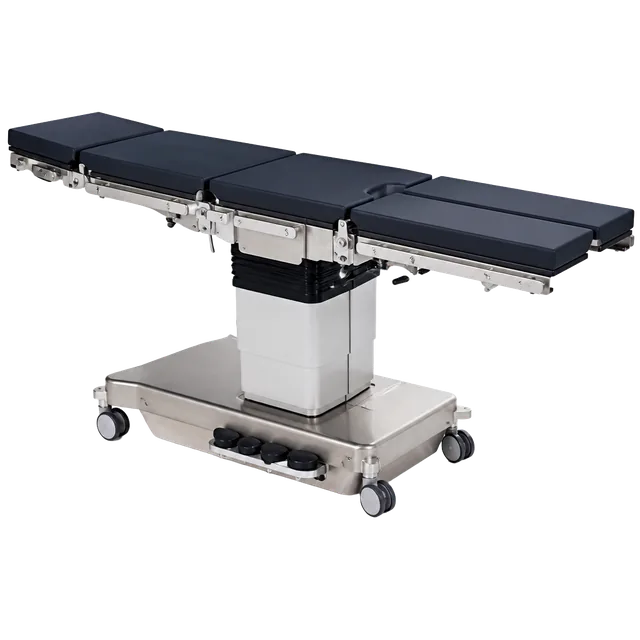
Every table visit verifies each articulation, hand-control function, hydraulic performance, and stability before releasing the table back to the OR.
- Service Type
- Surgical table repair, PM, and articulation service
- Equipment Supported
- Powered and hydraulic OR / surgical tables
- Common Issues
- Lift, tilt, Trendelenburg, hand control, hydraulics
- Facilities Served
- Surgery centers, hospitals, specialty ORs
At a glance
A quick summary of this service.
The problem
When an OR table stalls, an entire room stops.
Surgical tables carry the patient, the case, and the OR schedule. When lift stalls, tilt won't hold, or the hand control stops responding mid-case, the workflow around it stops with it.
Root cause could be hand-control, control-board, hydraulic, or articulation-mechanism related — and getting to the right fix quickly is what keeps the room online.
PBES helps OR teams service, verify, and document these tables so they stay safe and available for the surgical schedule.
Common issues
What we commonly see on surgical tables.
Most calls come down to controls, articulation, hydraulics, or stability.
Height / lift issues
Table won't raise, lower, or stalls partway through the motion.
Tilt & Trendelenburg
Tilt or Trendelenburg won't hold position or won't engage.
Hand control issues
Hand control unresponsive, button failure, or intermittent behavior.
Hydraulic issues
Slow motion, drift, unusual noise, or leak concerns on hydraulic units.
Stability concerns
Table feels loose, off-level, or wobbly under load.
Articulation / section issues
Head, leg, or back section not holding position or not articulating.
Battery / power issues
Battery-backed tables not holding charge or resetting under load.
Electrical safety findings
Ground continuity or leakage current out of range on inspection.
PM overdue
Tables past recommended service intervals without inspection.
Our approach
How PBES handles every service visit.
A disciplined sequence, delivered the same way on every device — so your team gets consistent service and consistent documentation through TESSA.
- Step 01
Document the reported issue
Capture symptoms, error codes, history, and how the problem is affecting the workflow.
- Step 02
Identify equipment and asset details
Confirm make, model, serial, and control number so the record ties back to the right device.
- Step 03
Inspect and test the device
Visual inspection plus operational testing appropriate for the equipment and reported issue.
- Step 04
Troubleshoot the likely cause
Based on manufacturer guidance and service findings, isolate the probable cause or next step.
- Step 05
Perform service, PM, or recommendation
Adjustments, cleaning, wear-part replacement, or clear repair recommendations when parts and scope allow.
- Step 06
Verify operation and document in TESSA
Post-service verification and a clean written report you can hand to an administrator or surveyor.
TESSA · The PBES advantage
Every OR table, tracked room by room.
TESSA gives OR leaders and biomeds visibility into every surgical table across every room — PM status, recurring articulation issues, and open follow-ups.
TESSA — Technical Equipment Support and Service Assistant — is how PBES organizes equipment records, service history, PM status, and repair follow-up for the facilities we serve.
- Table inventory by room and make/model/serial
- Repair and PM history captured on each asset
- Wear-item recommendations documented
- Electrical safety inspection records on the same record
- Follow-ups visible to OR administrators
- Multi-site rollups for administrators
Documentation
Clear documentation after every service visit.
TESSA helps PBES produce clean, consistent service documentation — the record your administrators, biomed program, and surveyors expect to see.
- Equipment identification (make, model, serial)
- Room / OR identifier
- Reported issue and observed symptoms
- Function checks (height, tilt, Trendelenburg, articulation)
- Hand-control and cable inspection
- Hydraulic performance observations
- Stability / safety observations
- Electrical safety findings when applicable
- Recommendations and follow-up
- Facility
- Example Facility
- Equipment
- Make / Model
- Serial
- SN-XXXXXXX
- Technician
- PBES field service
- Visit date
- MM / DD / YYYY
- Report ID
- TESSA-SUR-000123
Example: reported issue evaluated, functional testing performed, findings and recommendations documented for facility records.
Example layout · anonymized for demonstration
Related PBES services
Explore related biomedical services.
Facilities served
Healthcare organizations PBES supports.
Service area
Nationwide service. Florida-headquartered.
PBES supports single-location practices and multi-site healthcare groups in 27 states, coast to coast. Same team, same standards, wherever your facilities are.
See full coverageFAQ
Frequently asked questions.
How often should surgical tables have PM?
Most surgical tables benefit from at least an annual PM including articulation checks and stability verification, commonly paired with an electrical safety inspection on powered units.
Do you service hydraulic and electric tables?
PBES supports many common powered and hydraulic surgical tables. Specific capabilities depend on make, model, and parts availability.
Can you repair hand controls and foot pedals?
Yes. Hand control and pedal service is standard on surgical-table visits and captured on the record.
Can you help with stability or safety concerns?
Yes. Any stability concern should trigger a service visit; findings are documented for the equipment record.
Do you provide electrical safety inspection on OR tables?
Yes. Electrical safety inspection is commonly documented alongside PM visits on powered tables.
Can PBES help across every OR?
Yes. TESSA supports OR-by-OR equipment records so nothing slips between visits.
What documentation do we receive after service?
A written report including articulation-check outcomes, hand-control and hydraulic observations, stability findings, and any recommendations — filed on the asset in TESSA.
Talk to PBES
Keep every OR table safe and on schedule.
Talk to PBES about surgical-table repair, PM, articulation service, and inspection documentation across every OR.