
Autoclave Repair & Preventive Maintenance for Healthcare Facilities Nationwide
PBES helps medical, dental, surgical, and clinical teams keep sterilizers safe, functional, and ready for daily use through responsive repair service, preventive maintenance, and equipment support.
- Family-run biomedical service company since 1997
- Onsite service available
- Preventive maintenance & repair support
- Documentation-ready service reports
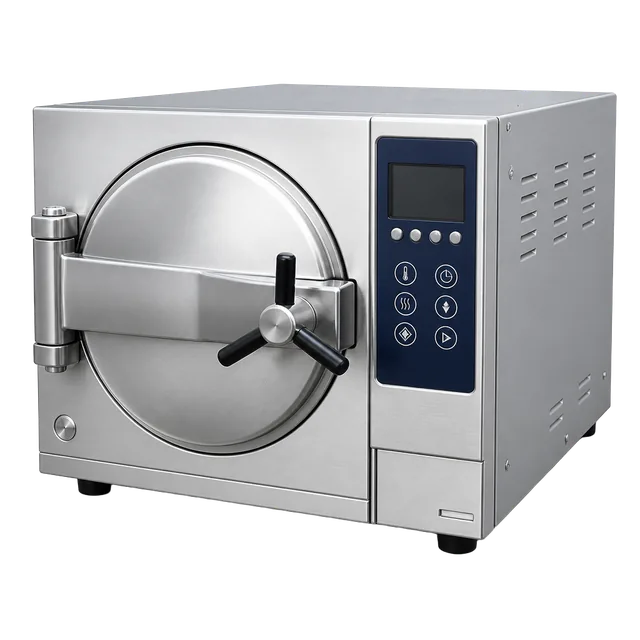
Every autoclave visit follows the same disciplined inspection and documentation flow through TESSA.
- Service Type
- Autoclave repair & preventive maintenance
- Equipment Supported
- Medical and dental sterilizers
- Common Issues
- Failed cycles, leaks, gasket wear, error codes, wet loads
- Facilities Served
- Urgent cares, surgery centers, dental, labs, CHCs
At a glance
A quick summary of this service.
The problem
When an autoclave goes down, your workflow stops.
Sterilizers are central to infection control and daily clinical operations. Instruments can't be turned over, procedures back up, and staff are left improvising in the middle of a patient day.
When a unit fails a cycle, leaks, won't reach temperature or pressure, throws error codes, or raises documentation concerns, the facility needs fast, qualified service — and a clear record of what was found and what was done.
PBES focuses on getting your sterilizer back to safe, verified operation and giving you the paperwork to prove it.
Common issues
What we see most often on autoclaves.
A short list of the symptoms healthcare facilities call PBES about. If you're seeing something that isn't listed here, it's still worth a call.
Failed sterilization cycles
Cycles abort, alarm, or complete with parameters that don't meet the load requirements.
Temperature or pressure issues
Unit struggles to reach or hold set point, or readings drift from expected values.
Door gasket leaks
Steam escapes at the door seal, causing pressure loss and inconsistent cycles.
Chamber leaks
Water or steam loss from fittings, valves, or chamber connections.
Error codes
Control board errors, sensor faults, or interlock alerts that stop the cycle.
Failed biological indicators
BI/CI results indicate the load did not meet sterilization parameters.
Drying issues
Loads coming out wet, extending turnaround and risking recontamination.
Slow heat-up
Longer than expected warm-up times, often tied to heaters, sensors, or scale buildup.
Printer or documentation issues
Missing cycle tapes, unreadable printouts, or data logging problems.
Preventive maintenance overdue
Units running past recommended service intervals without inspection.
Wear from heavy use
High-volume sterilizers showing worn valves, seals, or door components.
Inconsistent cycle behavior
Intermittent aborts, variable run times, or symptoms that don't repeat on demand.
Our approach
How PBES handles every service visit.
A disciplined sequence, delivered the same way on every device — so your team gets consistent service and consistent documentation through TESSA.
- Step 01
Document the reported issue
Capture symptoms, error codes, history, and how the problem is affecting the workflow.
- Step 02
Identify equipment and asset details
Confirm make, model, serial, and control number so the record ties back to the right device.
- Step 03
Inspect and test the device
Visual inspection plus operational testing appropriate for the equipment and reported issue.
- Step 04
Troubleshoot the likely cause
Based on manufacturer guidance and service findings, isolate the probable cause or next step.
- Step 05
Perform service, PM, or recommendation
Adjustments, cleaning, wear-part replacement, or clear repair recommendations when parts and scope allow.
- Step 06
Verify operation and document in TESSA
Post-service verification and a clean written report you can hand to an administrator or surveyor.
TESSA · The PBES advantage
TESSA gives you a real record of every sterilizer, not scattered paperwork.
For multi-site organizations, TESSA turns autoclave service from binders and photos on phones into an organized asset record — cycle counts, PM history, gasket replacements, and open follow-ups in one place.
TESSA — Technical Equipment Support and Service Assistant — is how PBES organizes equipment records, service history, PM status, and repair follow-up for the facilities we serve.
- Every autoclave tracked by make, model, and serial
- Cycle count and PM interval visibility
- Repair history and part replacements on record
- Inspection documentation ready when a surveyor asks
- Follow-up items don't get lost between visits
- Multi-site rollups for administrators
Documentation
Clear documentation after every service visit.
TESSA helps PBES produce clean, consistent service documentation — the record your administrators, biomed program, and surveyors expect to see.
- Equipment identification (make, model, serial)
- Reported issue and cycle history
- Technician findings
- Work performed and parts used
- Verification steps and results
- Recommendations & replacement part specs
- Photos when available
- Repair status & follow-up needs
- Facility
- Example Facility
- Equipment
- Make / Model
- Serial
- SN-XXXXXXX
- Technician
- PBES field service
- Visit date
- MM / DD / YYYY
- Report ID
- TESSA-AUT-000123
Example: reported issue evaluated, functional testing performed, findings and recommendations documented for facility records.
Example layout · anonymized for demonstration
Related PBES services
Explore related biomedical services.
Facilities served
Healthcare organizations PBES supports.
Service area
Nationwide service. Florida-headquartered.
PBES supports single-location practices and multi-site healthcare groups in 27 states, coast to coast. Same team, same standards, wherever your facilities are.
See full coverageFAQ
Frequently asked questions.
How often should an autoclave receive preventive maintenance?
Most sterilizers benefit from at least an annual PM, with more frequent service for higher-cycle-volume units. Manufacturer guidance and how heavily the unit is used should drive the interval.
What are common signs an autoclave needs service?
Aborted or failed cycles, temperature or pressure inconsistencies, steam or water leaks at the door, error codes, wet loads, longer heat-up times, and failed biological or chemical indicators are all reasons to schedule a service visit.
Do you service dental autoclaves?
Yes. PBES supports many common dental sterilizers, including popular tabletop units. Specific service capabilities depend on the model and parts availability.
Can PBES help with autoclave documentation?
Yes. Every service visit produces a written report through TESSA covering equipment identification, reported issue, findings, work performed, verification, and recommendations — suitable for internal records and inspection documentation.
What should we do if our autoclave fails a cycle?
Take the unit out of clinical use, hold any affected instruments per your infection-control policy, note the error or cycle information, and contact PBES so a technician can evaluate the unit and document findings.
Do you support multi-site organizations?
Yes. PBES supports single practices and multi-site healthcare groups. TESSA helps keep documentation and service history consistent across every location.
Do you replace autoclave gaskets?
When applicable and when parts are available, PBES performs gasket cleaning, evaluation, and replacement, and documents the work performed.
Do you provide a quote before repair work?
For repairs beyond a standard PM, PBES provides a recommendation and estimate for facility approval before proceeding, when scope allows.
Talk to PBES
Let's get your sterilizer back on cycle.
Talk to PBES about autoclave repair, preventive maintenance, gasket replacement, and documentation support for your facility.