
Service · Patient monitoring

Patient Monitor Repair for Surgery Centers, Clinics & Physician Groups

PBES helps keep multi-parameter monitors accurate and available — with service for NIBP, SpO2, ECG, temperature, printer, and battery issues.

  • Multi-parameter monitor expertise
  • Onsite service nationwide
  • PM and electrical safety inspections available
  • Documented reports via TESSA
PBES · Equipment referencePatient Monitor Repair & Service
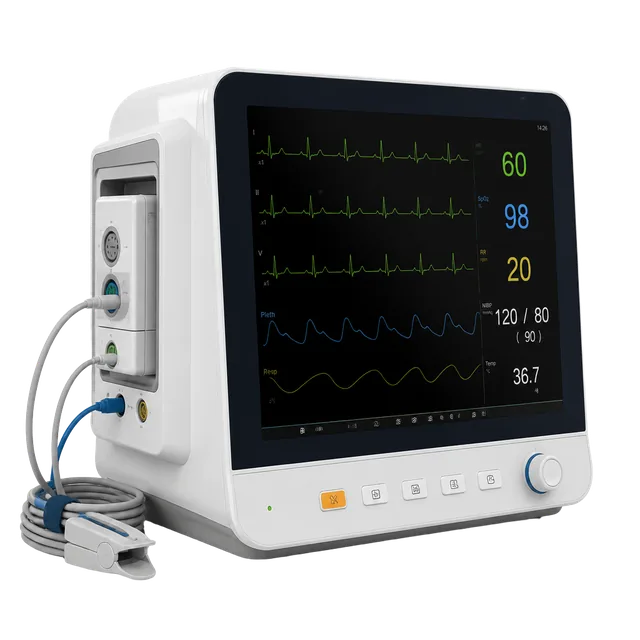
Patient monitor with waveforms and numeric readouts
TESSA · Service snapshot
NIBP · SpO2 · ECG · Temp verification
Report ready

Every monitor visit verifies each parameter module, alarms, and battery before returning the unit to clinical use.

Service Type
Patient monitor repair, PM, and parameter checks
Equipment Supported
Multi-parameter and vital signs monitors
Common Issues
NIBP, SpO2, ECG, battery, display, alarms
Facilities Served
Surgery centers, urgent cares, clinics, physician groups
Report format · TESSA PDF · Portal

At a glance

A quick summary of this service.

Service Type
Patient monitor repair, PM, and parameter checks
Equipment Supported
Multi-parameter and vital signs monitors
Common Issues
NIBP, SpO2, ECG, battery, display, alarms
Facilities Served
Surgery centers, urgent cares, clinics, physician groups
Documentation
Service reports and PM records via TESSA
Coverage
Onsite service nationwide

The problem

A monitor that can't be trusted holds up every case.

Multi-parameter monitors are relied on for real-time vitals during procedures, admissions, and recovery. When NIBP won't cuff, SpO2 reads poorly, or an alarm won't stop, the clinical team loses confidence in the number on the screen.

The cause is often a specific parameter module, a worn cable or cuff, a battery near end of life, or an intermittent display issue — and each takes a different fix.

PBES isolates the actual issue, restores accurate operation, and documents the visit on the equipment record.

Common issues

What we commonly see on patient monitors.

If a monitor is behaving unexpectedly, one of these is usually behind it.

NIBP failures

Won't cuff, over/under-inflation, error codes, or inconsistent readings.

SpO2 problems

Poor signal, wrong readings, or sensor recognition errors.

ECG lead issues

Lead-off alarms, artifact, or missing waveform on one or more leads.

Temperature module issues

Probe recognition or reading drift on temperature modules.

Battery failures

Won't hold a charge, shuts down when unplugged, or age-related capacity loss.

Display / power issues

Screen flicker, no boot, or power-supply-related shutdowns.

Parameter or alarm errors

Alarms that won't clear, misconfiguration, or module fault messages.

Cables, cuffs, and accessories

Worn NIBP hoses, cracked SpO2 cables, damaged lead wires.

Electrical safety concerns

Ground continuity or leakage current findings on inspection.

Our approach

How PBES handles every service visit.

A disciplined sequence, delivered the same way on every device — so your team gets consistent service and consistent documentation through TESSA.

  1. Step 01

    Document the reported issue

    Capture symptoms, error codes, history, and how the problem is affecting the workflow.

  2. Step 02

    Identify equipment and asset details

    Confirm make, model, serial, and control number so the record ties back to the right device.

  3. Step 03

    Inspect and test the device

    Visual inspection plus operational testing appropriate for the equipment and reported issue.

  4. Step 04

    Troubleshoot the likely cause

    Based on manufacturer guidance and service findings, isolate the probable cause or next step.

  5. Step 05

    Perform service, PM, or recommendation

    Adjustments, cleaning, wear-part replacement, or clear repair recommendations when parts and scope allow.

  6. Step 06

    Verify operation and document in TESSA

    Post-service verification and a clean written report you can hand to an administrator or surveyor.

TESSA · The PBES advantage

Every monitor across every room, tracked in one place.

TESSA gives clinical leaders visibility into every patient monitor across every OR, procedure room, and clinic — PM status, recurring parameter issues, and open follow-ups without chasing paper.

TESSA — Technical Equipment Support and Service Assistant — is how PBES organizes equipment records, service history, PM status, and repair follow-up for the facilities we serve.

  • Monitor inventory by make, model, serial, and location
  • Parameter service history captured on each asset
  • PM status and next-due visibility
  • Battery replacement history documented
  • Electrical safety inspection records on the same record
  • Multi-site rollups for administrators

Documentation

Clear documentation after every service visit.

TESSA helps PBES produce clean, consistent service documentation — the record your administrators, biomed program, and surveyors expect to see.

  • Equipment identification (make, model, serial)
  • Reported issue and parameter symptoms
  • Module-by-module test findings
  • Alarm and battery test results
  • Work performed and parts used
  • Electrical safety findings when applicable
  • Recommendations and follow-up
  • Photos when available
TESSA · Service report
Example report layout
Completed
Facility
Example Facility
Equipment
Make / Model
Serial
SN-XXXXXXX
Technician
PBES field service
Visit date
MM / DD / YYYY
Report ID
TESSA-PAT-000123
Findings

Example: reported issue evaluated, functional testing performed, findings and recommendations documented for facility records.

Example layout · anonymized for demonstration

Case studies · Example

Example service scenarios from the field.

A preview of the case-study library that lives underneath every equipment page — once connected, these will be generated from verified TESSA service reports.

RepairExample

NIBP Cuff Failure on OR Monitor

Equipment
Multi-parameter OR monitor
Reported issue
NIBP would not inflate reliably during pre-op vitals.
Root cause / status
Worn cuff and hose contributing to inflation loss; module function otherwise within range.
Outcome
Cuff/hose replacement recommendation; module verification documented in TESSA.
Case study coming soon
PMExample

Preventive Maintenance on Recovery-Room Monitors

Equipment
Multi-parameter monitors, several units
Reported issue
Routine annual PM and parameter verification across the recovery bay.
Root cause / status
Units within expected operating range; two batteries flagged for replacement.
Outcome
PM records, battery findings, and follow-up captured on each asset in TESSA.
Case study coming soon
RepairExample

SpO2 Sensor Recognition Error

Equipment
Bedside patient monitor
Reported issue
Sensor showed recognition error with multiple probes.
Root cause / status
Investigation focused on sensor cable and connector; alternate probe restored reading.
Outcome
Cable/connector recommendation documented and clinical guidance provided until replacement.
Case study coming soon

These case studies are example placeholders shown for demonstration. Real case studies can be generated from verified TESSA service reports and attached to the relevant equipment page.

Facilities served

Healthcare organizations PBES supports.

Community health centers
Surgery centers
Urgent care groups
Dental practices
Physician & specialty clinics
Labs & multi-site groups

Service area

Nationwide service. Florida-headquartered.

PBES supports single-location practices and multi-site healthcare groups in 27 states, coast to coast. Same team, same standards, wherever your facilities are.

See full coverage
Alabama — PBES service coverage · view state pageAlaska — available on requestArizona — PBES service coverage · view state pageArkansas — available on requestCalifornia — PBES service coverage · view state pageColorado — available on requestConnecticut — PBES service coverage · view state pageDelaware — available on requestFlorida — PBES service coverage · view state pageGeorgia — PBES service coverage · view state pageHawaii — available on requestIdaho — PBES service coverage · view state pageIllinois — PBES service coverage · view state pageIndiana — available on requestIowa — available on requestKansas — available on requestKentucky — available on requestLouisiana — PBES service coverage · view state pageMaine — available on requestMaryland — PBES service coverage · view state pageMassachusetts — PBES service coverage · view state pageMichigan — available on requestMinnesota — available on requestMississippi — PBES service coverage · view state pageMissouri — available on requestMontana — available on requestNebraska — available on requestNevada — PBES service coverage · view state pageNew Hampshire — available on requestNew Jersey — PBES service coverage · view state pageNew Mexico — PBES service coverage · view state pageNew York — PBES service coverage · view state pageNorth Carolina — PBES service coverage · view state pageNorth Dakota — available on requestOhio — PBES service coverage · view state pageOklahoma — PBES service coverage · view state pageOregon — PBES service coverage · view state pagePennsylvania — PBES service coverage · view state pageRhode Island — available on requestSouth Carolina — PBES service coverage · view state pageSouth Dakota — available on requestTennessee — available on requestTexas — PBES service coverage · view state pageUtah — available on requestVermont — PBES service coverage · view state pageVirginia — PBES service coverage · view state pageWashington — PBES service coverage · view state pageWest Virginia — available on requestWisconsin — PBES service coverage · view state pageWyoming — available on request
Active coverageOn request27 states

FAQ

Frequently asked questions.

How often should patient monitors be serviced?

Most patient monitors benefit from at least an annual PM, often paired with an electrical safety inspection. Frequency should follow manufacturer guidance and how heavily the unit is used.

Can you service specific parameter modules?

PBES services many common NIBP, SpO2, ECG, and temperature modules. Specific capabilities depend on the make, model, and parts availability.

Do you replace monitor batteries?

Yes. When compatible batteries are available, PBES replaces monitor batteries and documents the change on the equipment record.

What about NIBP accuracy checks?

Functional NIBP checks are typically part of a PM visit. Results are documented on the service record.

Do you support surgery-center monitor programs?

Yes. PBES supports ASCs with PM programs, electrical safety inspections, and repair support across all patient monitors on the floor.

Can PBES help across multiple sites?

Yes. TESSA is built for multi-site organizations so PM status and service history are visible across every location.

Can you help with alarms that won't clear?

Yes. Persistent alarms usually trace back to a specific module, cable, or configuration; a technician can isolate the cause and document the finding.

Talk to PBES

Keep every monitor accurate and available.

Talk to PBES about patient monitor repair, PM programs, and inspection documentation for your facility.