
Electrical Outlet Inspections for medical facilities
PBES inspects and tests receptacles in patient-care areas — physical condition, correct polarity, ground continuity, and retention force of the grounding contact — and documents the result for every outlet by room and location.
- Testing performed per outlet, not per room estimate
- Practice referenced to NFPA 99 Chapter 6
- Hospital-grade receptacle identification and condition check
- Per-outlet records organized in TESSA
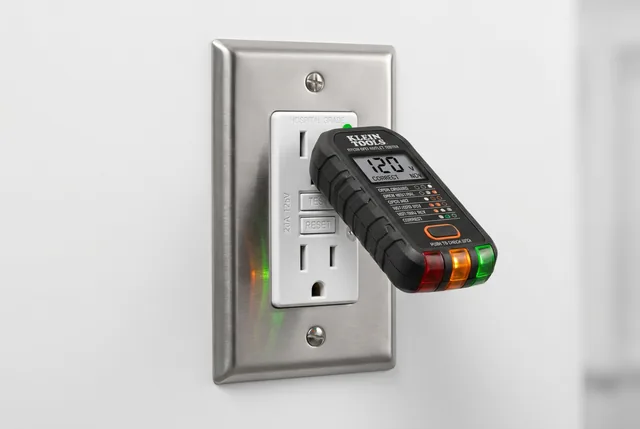
Each receptacle is identified by room and location, tested, and recorded as pass or deficiency — so your facility has a defensible document rather than a summary sheet.
- Service Type
- Receptacle inspection and testing in patient-care areas
- What Is Tested
- Physical condition, polarity, ground continuity, ground-contact retention force
- Reference Practice
- NFPA 99 Chapter 6 receptacle testing practice, as adopted by your facility
- Facilities Supported
- ASCs, physician practices, community health centers, dental and specialty clinics
At a glance
A quick summary of this service.
The problem
Outlets are easy to overlook and hard to defend without records.
Receptacles in patient-care areas carry the power path for the equipment your clinicians rely on. A loose grounding contact, a reversed hot and neutral, or an open ground is invisible from the outside — the outlet still looks fine and the device still turns on.
Facilities are also routinely asked to show that patient-care-area receptacles have been tested and that deficiencies were tracked to resolution. A verbal assurance or a single line in a maintenance log rarely holds up.
PBES performs the testing and produces the record. Where a receptacle fails, we document the specific finding so your electrician knows exactly what to correct and where.
Common issues
What we commonly find
These are the conditions that show up most often during receptacle inspections in outpatient care environments.
Weak ground-contact retention
Plugs slip out or make poor contact; the outlet still energizes normally.
Reversed polarity
Hot and neutral wired backwards behind the faceplate.
Open ground
No effective equipment-grounding path at the receptacle.
Open neutral or open hot
Dead or partially functioning outlets found during testing.
Damaged faceplates and housings
Cracked plates, loose mounting, or scorched contacts.
Missing hospital-grade identification
Non-hospital-grade receptacles installed where the facility expects hospital grade.
Unlabeled or mislabeled circuits
Outlets that cannot be traced back to a panel or circuit.
Non-functional outlets
Receptacles carried on the inventory that no longer deliver power.
Untested outlets
Rooms added or renovated after the last inspection cycle and never captured.
Our approach
How PBES handles every service visit.
A disciplined sequence, delivered the same way on every device — so your team gets consistent service and consistent documentation through TESSA.
- Step 01
Document the reported issue
Capture symptoms, error codes, history, and how the problem is affecting the workflow.
- Step 02
Identify equipment and asset details
Confirm make, model, serial, and control number so the record ties back to the right device.
- Step 03
Inspect and test the device
Visual inspection plus operational testing appropriate for the equipment and reported issue.
- Step 04
Troubleshoot the likely cause
Based on manufacturer guidance and service findings, isolate the probable cause or next step.
- Step 05
Perform service, PM, or recommendation
Adjustments, cleaning, wear-part replacement, or clear repair recommendations when parts and scope allow.
- Step 06
Verify operation and document in TESSA
Post-service verification and a clean written report you can hand to an administrator or surveyor.
TESSA · The PBES advantage
How PBES documents outlet inspections
Every receptacle inspected is recorded in TESSA with its location, test result, and any deficiency. Administrators can pull the record by site, by room, or by open deficiency.
TESSA — Technical Equipment Support and Service Assistant — is how PBES organizes equipment records, service history, PM status, and repair follow-up for the facilities we serve.
- Outlet identified by building, room, and wall position
- Test performed and result recorded per receptacle
- Deficiency description written in plain, actionable language
- Open findings tracked until the facility confirms correction
- Multi-site visibility for administrators
- Records exportable on request
Documentation
Clear documentation after every service visit.
TESSA helps PBES produce clean, consistent service documentation — the record your administrators, biomed program, and surveyors expect to see.
- Outlet identifier, building, room, and location
- Receptacle type and hospital-grade identification where present
- Physical condition observations
- Polarity result
- Ground continuity result
- Ground-contact retention force result where tested
- Pass or deficiency outcome with description
- Technician and date of inspection
- Facility
- Example Facility
- Equipment
- Make / Model
- Serial
- SN-XXXXXXX
- Technician
- PBES field service
- Visit date
- MM / DD / YYYY
- Report ID
- TESSA-ELE-000123
Example: reported issue evaluated, functional testing performed, findings and recommendations documented for facility records.
Example layout · anonymized for demonstration
Related PBES services
Explore related biomedical services.
Annual NFPA 80 fire and smoke door assembly inspections, per door.
Annual ESI documentation for patient-care devices.
Manufacturer-aligned PM to reduce downtime.
Inventory, service history, PM and repair visibility.
Facilities served
Healthcare organizations PBES supports.
Service area
Nationwide service. Florida-headquartered.
PBES supports single-location practices and multi-site healthcare groups in 27 states, coast to coast. Same team, same standards, wherever your facilities are.
See full coverageFAQ
Frequently asked questions.
What does a PBES outlet inspection include?
We inspect each receptacle for physical condition and damage, verify correct polarity, verify ground continuity, and test the retention force of the grounding contact where applicable. Each outlet is recorded individually with its location and result.
Is this an NFPA 99 requirement?
NFPA 99 Chapter 6 addresses testing of receptacles in patient-care spaces, including physical integrity, polarity, ground continuity, and grounding-contact retention force. Whether and how it applies to your facility depends on the codes your authority having jurisdiction has adopted and on your own facility policy. PBES performs the testing and documents the results; PBES does not certify facility compliance.
Do you repair or rewire the outlets you find problems with?
No. PBES performs inspection, testing, and documentation, and reports deficiencies with enough detail to act on. Corrective electrical work is performed by the facility's licensed electrician. We can retest and document the corrected receptacle afterward.
How often should receptacles be tested?
Frequency is set by your facility's policy and by the requirements your authority having jurisdiction enforces. Many outpatient facilities test patient-care-area receptacles on an annual cycle and test again after any renovation or electrical work.
Can outlet inspections be combined with our other PBES visits?
Yes. Outlet inspections are commonly scheduled alongside electrical-safety inspections and preventive maintenance so the facility gets one coordinated visit and one consolidated record set.
What happens to a receptacle that fails?
The finding is documented with the outlet's location and the specific condition observed. Handling of the outlet — including taking it out of service — follows your facility's policy. The open finding stays visible in TESSA until you confirm the correction.
Talk to PBES
Get every patient-care outlet tested and documented.
PBES inspects and tests receptacles across your facility and delivers a per-outlet record you can hand to a surveyor or an electrician without translation.