
Centrifuge PM & Verification for Clinics, Physician Offices & Labs
PBES supports centrifuge preventive maintenance and verification — RPM check, timer verification, imbalance evaluation, and lid latch service.
- Clinical and lab centrifuge support
- RPM and timer verification
- Onsite service nationwide
- Documented PM reports via TESSA
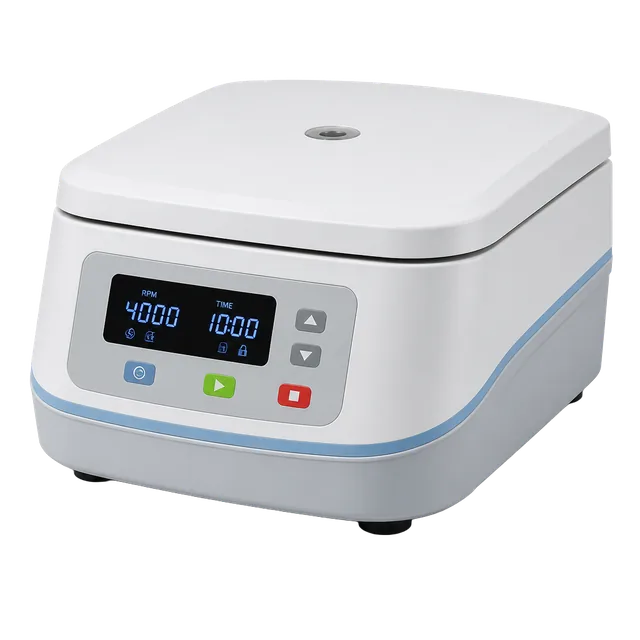
Every centrifuge visit verifies function, timer, and safety mechanisms with documentation for the equipment record.
- Service Type
- Centrifuge PM, verification, and repair support
- Equipment Supported
- Clinical and small lab centrifuges
- Common Issues
- RPM, imbalance, timer, lid latch, vibration
- Facilities Served
- Clinics, physician offices, labs, CHCs
At a glance
A quick summary of this service.
The problem
A centrifuge you can't trust holds up the whole workflow.
When a centrifuge runs rough, an imbalance alarm won't clear, or the timer starts skipping, the lab or clinical team stops trusting the run — and that impacts everything downstream.
Quiet issues matter too: RPM drift, worn rotor components, and lid-latch wear can all show up as inconsistent results long before they become a safety concern.
PBES verifies operation, addresses common wear items, and documents the visit on the equipment record.
Common issues
What we commonly see on centrifuges.
Most centrifuge calls come down to verification, wear, or safety-mechanism issues.
RPM verification
Displayed RPM needs verification against a reference.
Imbalance concerns
Imbalance alarm won't clear or unit vibrates more than expected.
Timer issues
Timer counts inconsistently, skips, or does not stop the run correctly.
Lid latch issues
Latch worn, sticky, or safety-interlock behavior inconsistent.
Vibration / noise
Excessive vibration or unusual noise during runs.
Rotor / trunnion wear
Wear on rotor accessories, trunnions, or cushions.
Motor or brake issues
Slow spin-up, extended coast-down, or braking concerns.
PM overdue
Units past recommended service intervals without verification.
Our approach
How PBES handles every service visit.
A disciplined sequence, delivered the same way on every device — so your team gets consistent service and consistent documentation through TESSA.
- Step 01
Document the reported issue
Capture symptoms, error codes, history, and how the problem is affecting the workflow.
- Step 02
Identify equipment and asset details
Confirm make, model, serial, and control number so the record ties back to the right device.
- Step 03
Inspect and test the device
Visual inspection plus operational testing appropriate for the equipment and reported issue.
- Step 04
Troubleshoot the likely cause
Based on manufacturer guidance and service findings, isolate the probable cause or next step.
- Step 05
Perform service, PM, or recommendation
Adjustments, cleaning, wear-part replacement, or clear repair recommendations when parts and scope allow.
- Step 06
Verify operation and document in TESSA
Post-service verification and a clean written report you can hand to an administrator or surveyor.
TESSA · The PBES advantage
Every centrifuge on a verified service record.
TESSA helps clinics, physician offices, and labs keep centrifuge PM and verification records where administrators can actually find them.
TESSA — Technical Equipment Support and Service Assistant — is how PBES organizes equipment records, service history, PM status, and repair follow-up for the facilities we serve.
- Centrifuge inventory by location and rotor type
- RPM and timer verification history captured
- Wear-item recommendations documented
- Electrical safety inspection records on the same asset
- Follow-ups visible to administrators
- Multi-site rollups for administrators
Documentation
Clear documentation after every service visit.
TESSA helps PBES produce clean, consistent service documentation — the record your administrators, biomed program, and surveyors expect to see.
- Equipment identification (make, model, serial)
- Reported issue and run symptoms
- RPM verification results
- Timer verification results
- Lid latch and safety interlock findings
- Work performed and parts used
- Recommendations and follow-up
- Photos when available
- Facility
- Example Facility
- Equipment
- Make / Model
- Serial
- SN-XXXXXXX
- Technician
- PBES field service
- Visit date
- MM / DD / YYYY
- Report ID
- TESSA-CEN-000123
Example: reported issue evaluated, functional testing performed, findings and recommendations documented for facility records.
Example layout · anonymized for demonstration
Related PBES services
Explore related biomedical services.
Facilities served
Healthcare organizations PBES supports.
Service area
Nationwide service. Florida-headquartered.
PBES supports single-location practices and multi-site healthcare groups in 27 states, coast to coast. Same team, same standards, wherever your facilities are.
See full coverageFAQ
Frequently asked questions.
How often should a centrifuge have PM?
Most centrifuges benefit from at least an annual PM, often paired with RPM and timer verification.
Do you verify centrifuge RPM?
Yes. RPM verification against a reference is a standard part of a PM visit and is documented on the service record.
Can you address imbalance alarms?
Yes. A technician can inspect rotor seating, cushions, and mounting to isolate the source and document the finding.
Do you service lid latches and safety interlocks?
When parts are available, PBES supports latch inspection and replacement as part of centrifuge service.
What common wear items get replaced?
Cushions, trunnions, gaskets, and lid latches are common wear items; replacement recommendations are provided when needed.
Can PBES support labs across multiple sites?
Yes. TESSA supports multi-site PM tracking so administrators can see status across every location.
Do you handle both benchtop and swing-bucket units?
PBES supports many common clinical and small lab centrifuges. Specific capabilities depend on make, model, and parts availability.
Talk to PBES
Get your centrifuges verified and documented.
Talk to PBES about centrifuge PM, RPM verification, and documentation for your practice or lab.